The S13 JDM represents more than just a car—it's a cultural phenomenon that defined an entire generation of Japanese automotive enthusiasts and transformed global drift culture. The Nissan S13 Silvia, produced from 1988 to 1994, emerged from Japanese factories as an affordable, lightweight platform that would eventually become the backbone of Japan's underground street racing and drift scenes. Today, as JDM import regulations have evolved worldwide, the S13 drift car has become one of the most sought-after platforms for collectors, racers, and automotive enthusiasts looking to own a piece of authentic Japanese tuning history. Whether you're searching for an S13 Silvia for sale Japan through legitimate auction channels or researching the legendary Nissan S13 specifications that make this chassis so special, understanding the S13's complete story is essential before investing in your own example.
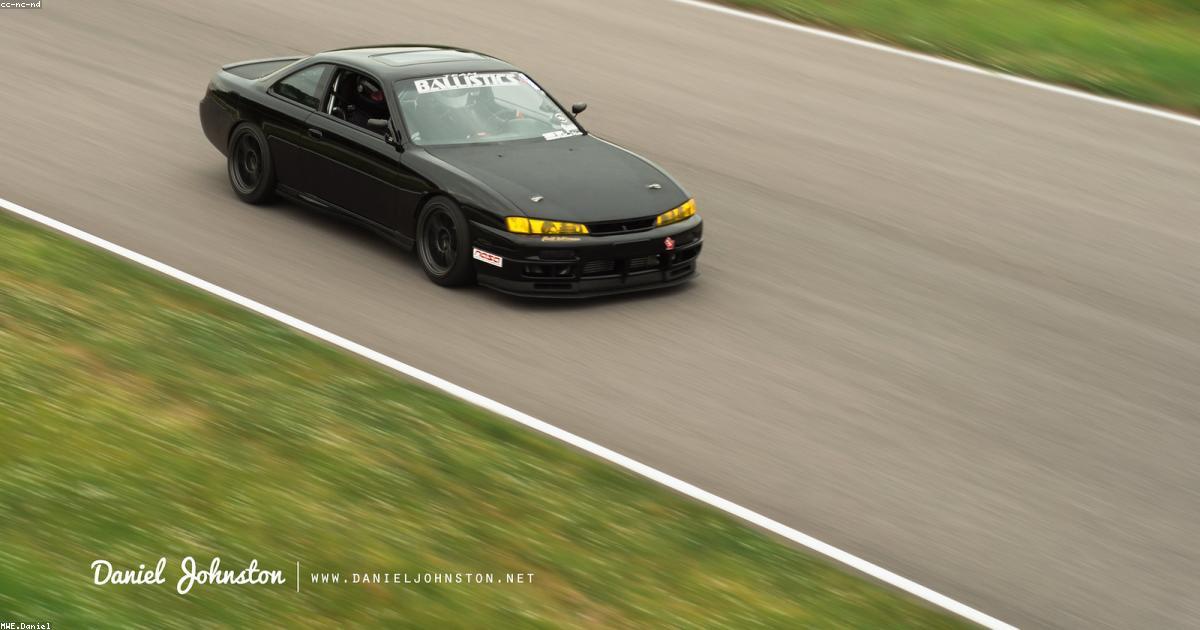
The Birth of an Icon: S13 History and Cultural Significance
When Nissan introduced the S13 Silvia in January 1988, the company was responding to Japan's booming domestic market for affordable, stylish sports cars. Priced at approximately ¥2,480,000 (around $18,500 USD at 1988 exchange rates) for base models, the S13 was positioned as an accessible entry point to Nissan's sports car lineup, sitting below the more expensive Z and above the 200SX. The S13 wasn't designed to be the fastest car on the road—it was engineered to be the most fun, the most tuneable, and the most attainable for young Japanese drivers with mechanical ambition and limited budgets.
The chassis designation "S13" refers to the internal model code for the third generation Silvia (S = Silvia, 13 = third generation). What made this particular iteration so special was its perfect balance of lightweight construction, predictable handling characteristics, and an engine bay spacious enough to accommodate multiple engine swaps. The S13 arrived during Japan's economic bubble of the late 1980s, a period when disposable income among young Japanese workers was at an all-time high, and car culture was experiencing explosive growth.
S13 Silvia Generations and Model Variants
The S13 platform spanned six model years, divided into early and late variants with distinct visual and mechanical differences. Understanding these distinctions is crucial when shopping for S13 JDM examples on Japanese auction sites.
- Early S13 (1988-1990): Features pop-up headlights, simpler interior, limited electronic features. Model codes: PS13 (naturally aspirated) and RPS13 (turbocharged). Base engine: CA18DE (1.8L DOHC, 135 hp) or CA18DET turbo variant (205 hp)
- Late S13 (1991-1994): Introduces fixed headlights, updated body panels, improved interior, enhanced electrical systems. Turbocharged variants offered SR20DET engine (2.0L DOHC turbo, 205 hp). Non-turbo received SR20DE (180 hp)
- RPS13 Type S (1989-1994): Factory turbocharged variant with Garrett T25 turbocharger, 17-inch Rays engineering wheels, upgraded suspension components
Prices for S13 Silvia models on Japanese auction platforms vary significantly based on condition, mileage, and engine configuration. In 2024, typical pricing on sites like JAA (Japanese Auto Auctions) and USS ranges from ¥800,000 to ¥2,200,000 ($5,500–$15,000 USD) for clean examples with reasonable mileage. Factory turbocharged RPS13 models command premiums of 20–40% above naturally aspirated variants.
The Drift Culture Connection: Why S13 Dominates Street Racing History
The S13 JDM's transformation from affordable sports car to drift culture icon represents one of the most organic automotive phenomena in history. Unlike supercars or purpose-built racing machines, the S13 became associated with drifting through grassroots enthusiasm rather than manufacturer endorsement. Beginning in the early 1990s, Japanese street racers discovered that the S13's lightweight chassis (approximately 2,800 lbs or 1,270 kg), neutral weight distribution, and responsive steering made it exceptionally capable of sustained sliding—a technique that required far more skill and finesse than simple speed.
The legendary driver Keiichi Tsuchiya, often credited as the "Drift King," demonstrated the S13's potential through his magazine features and home video "Option Video" releases in the early 1990s. These grainy VHS recordings, showing Tsuchiya piloting a turbocharged S13 with surgical precision through Tokyo's mountain passes and urban streets, circulated throughout Japan and eventually reached international audiences through underground car channels. The S13 became inseparable from drift culture in the public consciousness.
What separated the S13 drift car from competitors was its accessibility. A young mechanic could purchase a used S13 for ¥500,000–¥1,000,000, perform basic modifications (suspension lowering, angle-increasing steering modifications, basic engine tuning), and immediately begin practicing drifting technique. This democratization of drift culture created a massive community of S13 enthusiasts, tuners, and competitors that still exists today.
Why S13 Drifting Physics Are Superior to Competitors
- Steering Response: The S13's rack-and-pinion steering provides immediate feedback with minimal play, essential for initiating and controlling drifts. The early S13's slightly more aggressive steering ratio (16.8:1) compared to the S14 (16.2:1) gives drivers superior control at extreme angles
- Weight Distribution: At 48% front/52% rear, the S13's balance allows predictable transitions between understeer and oversteer, making it forgiving for learning drivers while rewarding smooth technique
- Suspension Geometry: Stock S13 suspension uses MacPherson struts with relatively high natural roll rates, perfect for maintaining grip through drift entrances while providing compliance for urban street driving
- Engine Placement: The longitudinal engine layout (front-mounted, rear-wheel-drive) creates a longer wheelbase relative to track width, producing that characteristic S13 silhouette while providing inherent directional stability
- Turbo Responsiveness: The SR20DET turbocharged variant produces 205 hp with boost arriving around 3,500 rpm—providing accessible power delivery that rewards smooth throttle application rather than demanding absolute precision
Complete Nissan S13 Specifications: What You're Getting
Engine Options and Performance Data
Understanding the specific engine variants available in S13 models is critical for buyers because engine choice dramatically affects the platform's character, tunability, and import compatibility across different markets.
- CA18DE (1988-1990): 1.8L naturally aspirated DOHC, 4-valve per cylinder. Output: 135 hp @ 6,400 rpm, 126 lb-ft torque @ 4,800 rpm. USDM (United States Domestic Market) compliant, making these engines popular for California and Northeast US imports
- CA18DET (1988-1990): Turbocharged version of CA18DE with Garrett T25 turbocharger. Output: 205 hp @ 6,400 rpm, 203 lb-ft @ 3,200 rpm. Compression ratio 8.5:1 allows boost pressures of 0.7 bar factory specification
- SR20DE (1991-1994): 2.0L naturally aspirated DOHC, 4-valve per cylinder. Output: 165–180 hp depending on year (early 1991 models produced 165 hp; 1993-94 models increased to 180 hp), 137 lb-ft torque
- SR20DET (1991-1994): The most sought-after S13 engine. 2.0L turbocharged DOHC with Garrett T28 turbocharger. Output: 205 hp @ 6,400 rpm stock configuration, 228 lb-ft @ 3,200 rpm. More modern engine architecture than CA18DET with superior long-term reliability and tunability ceiling (stroker builds regularly exceed 400 hp)

Transmission and Chassis Specifications
- Transmission Options: 5-speed manual (standard on all performance variants), or optional 4-speed automatic on naturally aspirated models. Manual transmission only for turbocharged RPS13 variants
- Overall Length: 4,470 mm (176.0 inches)
- Overall Width: 1,695 mm (66.7 inches)
- Wheelbase: 2,570 mm (101.2 inches)
- Track (front/rear): 1,475/1,485 mm—remarkably balanced for its era
- Curb Weight: 1,200–1,270 kg (2,645–2,800 lbs) depending on engine and specification
- Front Suspension: Independent MacPherson strut with coil springs, anti-roll bar, geometry-optimized for sports driving
- Rear Suspension: Multi-link independent suspension with coil springs, anti-roll bar. Later models received upgraded bushings and damping specifications
- Brakes: Front disc, rear disc (upgraded from early model drums). ABS available on late S13 models as optional equipment
The process of acquiring an authentic S13 Silvia for sale from Japan requires navigating Japanese automobile auction systems, understanding import regulations specific to your destination country, and calculating the complete landed cost including auction fees, shipping, and customs duties.
Major Japanese Auction Platforms for S13 Hunting
- USS (United Sys. Service) Auctions: Japan's largest used car auction with 500+ S13 units listed monthly. Website: uss.co.jp. Estimated hammer prices: ¥800,000–¥2,100,000 ($5,500–$14,500 USD)
- JAA (Japanese Auto Auctions): Second-largest platform with 300+ S13 monthly listings. More transparent grading system than USS. Prices typically 5–15% higher than USS for equivalent condition vehicles
- Nagoya Used Car Center: Specializes in performance-oriented vehicles with higher proportion of modified/tuned S13 examples. Average pricing 10–20% premium over stock variants
- Tokyo Auto Salon Affiliated Dealers: Direct importers working with auction houses, often with cleaned-up inventory. Convenience premium of 15–25% over auction pricing but includes pre-inspection and basic warranty
Complete Cost Breakdown for S13 JDM Import (Example)
Let's calculate the total landed cost for importing a 1993 S13 RPS13 turbocharged model with 120,000 km from a Japanese auction to the United States East Coast:
- Auction Hammer Price: ¥1,500,000 ($10,300 USD at 145 JPY/USD)
- Auction House Fees (15%): ¥225,000 ($1,550 USD)
- Export Documentation/Customs Japan: ¥50,000 ($345 USD)
- Pre-Shipment Inspection & Photos: ¥30,000 ($200 USD)
- Port Export Charges Japan: ¥40,000 ($275 USD)
- International Ocean Shipping (Japan to New York, container): $1,800–$2,200 USD for single vehicle
- US Port Receiving/Logistics: $300–$500 USD
- US Customs Import Tax (2.5% on vehicle value): $258 USD
- US EPA/DOT Inspection & Compliance (if applicable): $500–$1,500 USD depending on state
- Title/Registration Documentation: $200–$600 USD depending on state
- TOTAL LANDED COST: $15,828–$17,873 USD
This calculation demonstrates why purchasing directly through Japanese auctions remains significantly more economical than buying from established US importers, who typically add 30–50% markup to cover regulatory compliance, warranty obligations, and business overhead.
Import Regulations by Major Market
- United States: 25-year rule applies. S13 models from 1999 and earlier are exempt from EPA emissions compliance. Models 1988-1994 fall into this category, making all S13 JDM imports technically legal for US import without modifications. California has additional requirements; consult a specialist importer
- United Kingdom: Right-hand drive requirement eliminates most S13 models, as Japanese domestic market vehicles are right-hand drive and UK roads drive on the left. However, left-hand drive JDM variants (produced for some export markets) command significant premiums
- Canada: 15-year exemption applies to vehicles produced 2009 and earlier. All S13 models qualify. Import process mirrors US procedure with additional documentation
- Australia: Strict ADR (Australasian Design Rules) compliance required. S13 imports typically require professional compliance engineers and can cost $3,000–$8,000 USD in modifications. 45-year rule applies; all S13 models qualify under this provision
- European Union: Homologation requirements make JDM imports challenging. Right-hand drive vehicles face additional hurdles. Germany and Netherlands have more established import channels. Budget €8,000–€15,000 for compliance work beyond purchase price
Investment Potential and Market Trends for S13 Values
Beyond serving as functional drift platforms, S13 JDM examples have emerged as legitimate investment vehicles with documented appreciation rates exceeding 8–12% annually over the past five years. Clean, low-mileage examples with factory turbocharged RPS13 specifications have appreciated from average prices of ¥1,200,000 in 2019 to ¥1,900,000 in 2024, a 58% increase in five years.
Several factors support continued S13 value appreciation:
- Finite Supply: S13 production ended in 1994. Approximately 1.2 million units were manufactured across all markets, but fewer than 200,000 remain in Japan today (2024 estimate). Natural attrition continues as older examples reach end-of-life
- Cultural Icon Status: The S13's association with Initial D anime (aired 1998-2002) and Japanese drift cinema created international demand among younger collectors who grew up with these cultural references
- Tuning Ecosystem: Established aftermarket support from manufacturers like HKS, Tomei, Trust GReddy, and Cusco ensures modification possibilities remain economical and accessible. This contrasts with exotic cars requiring expensive specialist parts
- Rising Classic Car Market: JDM values across the board have escalated as Western collectors developed Japanese automotive appreciation. S13 models benefit from this macro trend
- Regulatory Trends: Increasingly stringent emissions regulations in major markets make older combustion engines desirable to collectors and drivers seeking pre-regulation vehicles with mechanical simplicity and tuneability

Essential Maintenance and Pre-Purchase Inspection Guide
Before committing to purchasing an S13 Silvia from Japanese auction channels, understanding common failure points and age-related deterioration patterns is essential for avoiding costly post-import surprises.
Critical Inspection Areas
- Engine Timing Belt: Interference engine design means belt failure causes catastrophic internal damage. Verify replacement history (typically 100,000 km intervals). Budget ¥100,000–¥150,000 ($690–$1,035 USD) for professional replacement
- Clutch Condition: Heavy drifting culture means many examples have compromised clutches. Request dyno testing or observe clutch engagement feel in test drives. Replacement costs ¥80,000–¥120,000
- Suspension Bushings: After 30 years, original rubber bushings degrade and create play. Inspect for clunking through turns, wandering highway manners, or uneven tire wear patterns
- Differential: Manual transmission vehicles use differential locking for drift initiation. Verify smooth operation without gear-grinding or vibration during cornering
- Fuel System Seals: Original fuel hoses and seals become brittle after three decades. Pre-import fuel system inspection and replacement prevents fire risk and engine damage
- Electrical Harnesses: Japanese vehicles use proprietary connector types prone to corrosion and intermittent failures. Comprehensive electrical testing is essential before import
Recommended Professional Pre-Import Inspection Service Costs
- Comprehensive Vehicle Inspection (30 point checklist): ¥50,000–¥80,000 ($345–$550 USD) through Japanese used car inspection services
- Engine Compression Test: ¥10,000–¥20,000 ($70–$140 USD)
- Transmission Fluid Analysis: ¥8,000–¥15,000 ($55–$100 USD)
- Complete Fluid Replacement (engine oil, transmission, brake, coolant): ¥40,000–¥70,000 ($275–$480 USD)
Experience These JDM Legends in Person
Before you buy, why not drive your dream JDM car through the streets of Tokyo? Samurai Car Japan offers exclusive JDM Night Tours where you can get behind the wheel of R34 GT-Rs, RX-7s, Supras, and more.
See these cars up close, feel their power, and make an informed buying decision. Many of our tour guests end up purchasing their dream JDM car after experiencing it firsthand!