The Toyota Aristo is one of the JDM world's best-kept secrets. While its export cousin, the Lexus GS300/GS400, earned respect as a luxury sedan, the Japanese-market Aristo V300 came with something the Lexus never offered: the legendary 2JZ-GTE twin-turbo inline-six engine. The same powerplant that made the Toyota Supra a tuning icon sits under the hood of this sleek four-door sedan, making the Aristo one of the most potent sleeper cars Japan ever produced.
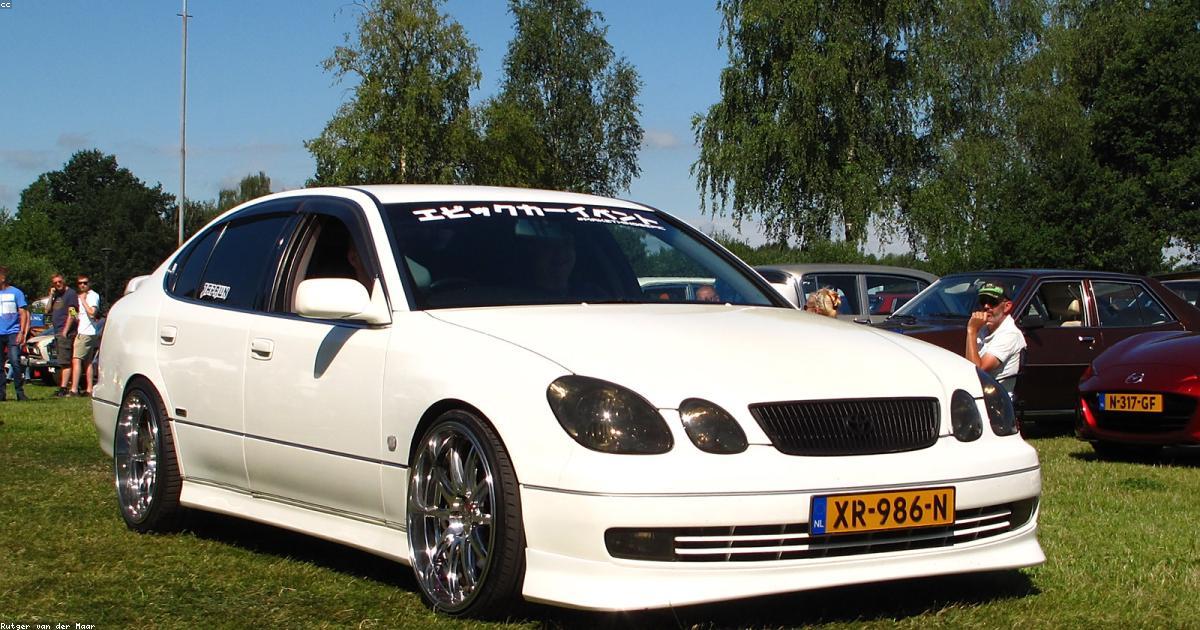
Toyota Aristo: Two Generations of JDM Luxury Performance
First Generation: JZS147 (1991-1997)
The first-generation Toyota Aristo debuted in 1991 as Toyota's answer to European sport sedans like the BMW 5 Series and Mercedes E-Class. It shared its platform with the Lexus GS300 but was sold exclusively in Japan through Toyota's Arist dealer network.
- 3.0V (JZS147): 2JZ-GE naturally aspirated inline-six, 230 hp
- 3.0V Twin Turbo (JZS147): 2JZ-GTE twin-turbo inline-six, 280 hp (gentleman's agreement limited)
- 4.0 Zi (UZS143): 1UZ-FE V8, 260 hp
- Transmission: 4-speed automatic (A340E/A341E)
- Weight: 1,600-1,680 kg
Second Generation: JZS161 (1997-2004)
The second-generation Aristo refined everything about the first. The JZS161 V300 is the one most JDM enthusiasts seek, featuring an improved 2JZ-GTE with VVT-i variable valve timing, better chassis dynamics, and more luxurious interior appointments.
- S300 (JZS160): 2JZ-GE VVT-i naturally aspirated, 215 hp
- V300 (JZS161): 2JZ-GTE VVT-i twin-turbo, 280 hp (easily 320+ hp stock)
- V300 Vertex Edition: Sport-tuned suspension, Vertex aero kit, sport seats
- Walnut Package: Premium wood trim, heated seats, upgraded audio
- Transmission: 4-speed automatic; 5-speed manual swap is popular
- Weight: 1,590-1,650 kg
V300 vs S300: Which Toyota Aristo Should You Buy?
The decision between the V300 and S300 comes down to your goals. If you want the twin-turbo 2JZ-GTE experience and serious tuning potential, the V300 is the only choice. If you want a comfortable daily driver with lower running costs and simpler maintenance, the S300's naturally aspirated 2JZ-GE is extremely reliable and still offers a refined driving experience.
The V300 commands a significant price premium over the S300. At Japanese auction, expect to pay 2-3x more for a comparable V300. However, for tuners, the V300's factory turbo setup, stronger internals, and oil squirters make it the superior platform for power builds.

2JZ-GTE Power: Why the Aristo Is a Tuner's Dream
The 2JZ-GTE in the Aristo V300 is identical in architecture to the Supra's engine. The cast-iron block with aluminum head, sequential twin-turbo system, and forged steel crankshaft give it legendary strength. Stock, the engine produces 280 hp (per the gentleman's agreement), but dyno tests consistently show 300-320 hp at the wheels from factory. The VVT-i version in the JZS161 adds better low-end torque and smoother power delivery compared to the earlier non-VVT-i variant.
With basic bolt-on modifications (downpipe, intake, boost controller, ECU tune), the Aristo V300 reliably produces 400-450 hp. Single turbo conversions with upgraded fuel systems push 600-800 hp on pump gas, and full-build 2JZ-GTEs in Aristos have exceeded 1,000 hp for drag racing. The engine's bottom end is famously strong enough to handle 700+ hp on stock internals.
Toyota Aristo Prices in 2026
The Toyota Aristo remains one of the best value propositions in the JDM market, especially compared to its Supra sibling which uses the same engine but costs 3-5x more.
Japanese Auction Prices
- JZS147 3.0V Twin Turbo (1991-1997): ¥500,000-¥1,500,000 ($3,300-$10,000 USD)
- JZS160 S300 (1997-2004): ¥300,000-¥800,000 ($2,000-$5,300 USD)
- JZS161 V300 (1997-2004): ¥1,000,000-¥3,000,000 ($6,600-$20,000 USD)
- JZS161 V300 Vertex Edition: ¥1,500,000-¥4,000,000 ($10,000-$26,500 USD)
- Low-mileage/mint examples: ¥3,000,000-¥5,000,000+ ($20,000-$33,000+ USD)
Compare this to a JZA80 Supra Turbo at ¥5,000,000-¥15,000,000 and the Aristo's value becomes clear. You get the same 2JZ-GTE engine, more interior space, and comparable aftermarket support at a fraction of the price. For more JDM price comparisons, see our JDM Car Prices 2026 guide.
Importing a Toyota Aristo: What You Need to Know
First-generation JZS147 Aristos (1991-1997) are all 25-year-rule eligible for US import. Second-generation JZS161 models from 1997-2001 are now also eligible. For UK, Australian, and Canadian buyers, most Aristos can be imported with standard compliance procedures. Check our country-specific guides for USA, UK, and Australia import procedures.
One advantage of the Aristo for import is parts availability. Since it shares the 2JZ engine with the Supra and many chassis components with the Lexus GS, finding replacement parts is straightforward in most markets. The JDM engine guide covers 2JZ parts sourcing in detail.
Common Issues & Buyer Checklist
- Automatic transmission: The A340E/A341E is the weak point. It struggles above 400 hp. Budget for a manual swap (W58 or R154) or automatic rebuild if tuning
- Turbo seals (V300): High-mileage cars may have worn turbo seals causing blue smoke. Sequential turbo transition should be smooth
- ECU immobilizer: JZS161 uses Toyota's immobilizer system. Ensure you receive all original keys
- Rust: Check rear wheel arches, trunk floor, and subframe mounting points. Northern Japan cars (Hokkaido, Tohoku) may have road salt damage
- Suspension bushings: Factory rubber bushings wear by 100,000 km. Budget for polyurethane replacement
- Power steering rack: Known to develop leaks at high mileage. Check for fluid seepage
Experience These JDM Legends in Person
Before you buy, why not drive your dream JDM car through the streets of Tokyo? Samurai Car Japan offers exclusive JDM Night Tours where you can get behind the wheel of R34 GT-Rs, RX-7s, Supras, and more.
See these cars up close, feel their power, and make an informed buying decision. Many of our tour guests end up purchasing their dream JDM car after experiencing it firsthand!
Frequently Asked Questions
Is the Toyota Aristo the same as the Lexus GS?
The Toyota Aristo and Lexus GS share the same platform and basic architecture, but they're not identical. The JDM-only Aristo V300 came with the 2JZ-GTE twin-turbo engine that was never offered in any Lexus GS model. The Aristo also had different interior trim options, Toyota-badged steering wheels, and Japanese-spec electronics. Think of the Aristo as the performance-focused version of the Lexus GS.
How much HP can a Toyota Aristo V300 make?
Stock, the Aristo V300 produces approximately 280-320 hp. With bolt-on modifications and an ECU tune, 400-450 hp is achievable. Single turbo conversions commonly reach 600-800 hp, and dedicated drag builds have exceeded 1,200 hp. The 2JZ-GTE's iron block can handle around 700 hp on stock internals, making it one of the most tunable engines ever produced.
Why is the Aristo cheaper than the Supra?
Despite sharing the same 2JZ-GTE engine, the Aristo is a four-door sedan while the Supra is a two-door sports coupe. The Supra's iconic status, lower production numbers, and motorsport heritage drive significantly higher demand and prices. The Aristo offers the same engine and tuning potential at 20-30% of the Supra's price, making it arguably the best value 2JZ car you can buy.
Can I import a Toyota Aristo to the United States?
Yes. All first-generation Aristos (1991-1997) and second-generation models through 2001 are now eligible under the 25-year rule. The import process is straightforward through a licensed Japanese exporter. Total landed cost for an Aristo V300 in the US is typically $15,000-$30,000 including purchase, shipping, and customs.