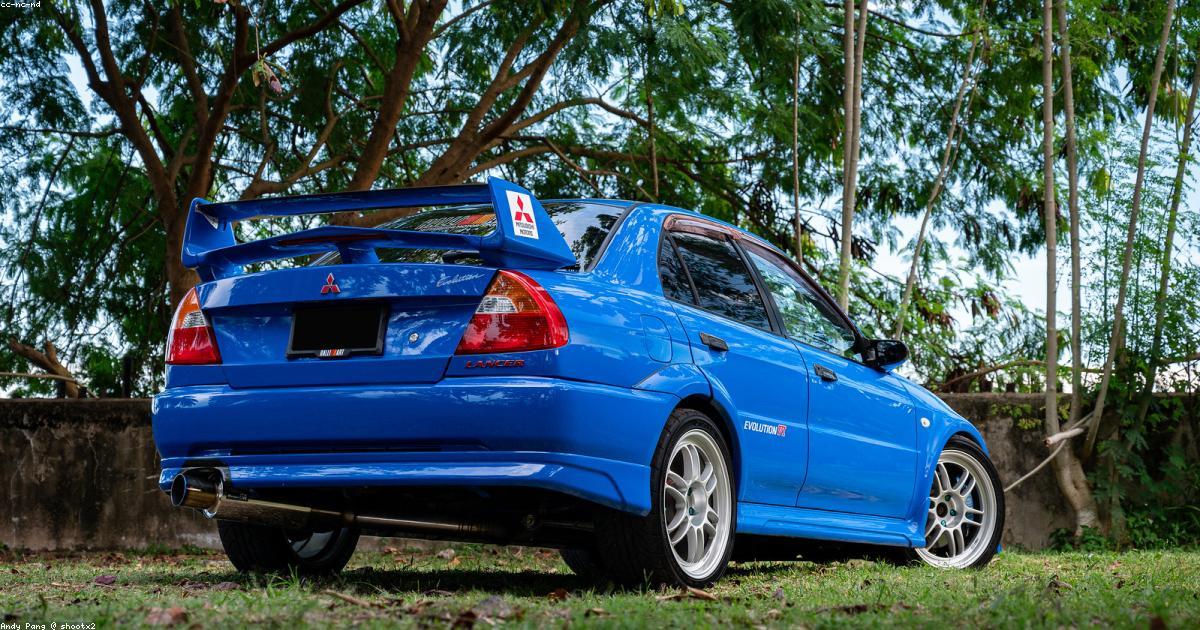
The Mitsubishi Lancer Evolution stands as one of the most iconic best JDM cars ever produced, commanding respect from enthusiasts worldwide. Whether you're hunting for a legendary performance machine or seeking to understand what makes this rally-bred warrior special, this comprehensive guide covers everything you need to know about importing an Evo. From the early generations that conquered World Rally Championships to the thunderous final evolution, the Lancer Evolution represents Japanese automotive engineering at its finest—a perfect gateway into the world of JDM sports cars that demand genuine performance alongside stunning Japanese craftsmanship.
Why the Mitsubishi Lancer Evolution Belongs Among the Best JDM Cars
When discussing best JDM cars, the Mitsubishi Lancer Evolution consistently tops enthusiast lists for compelling reasons. This isn't merely a sedan with a turbo—it's a purpose-built rally machine adapted for street use, representing Mitsubishi's uncompromising commitment to performance engineering.
The Evo earned its legendary status through six generations of relentless evolution (1992-2015), each iteration bringing technical innovations that pushed the boundaries of what all-wheel-drive performance could achieve. Factory support for World Rally Championship competition meant that cutting-edge technology filtered directly into production models, making every Evo owner a custodian of genuine racing heritage.
Technical Foundation: The AWD Revolution
At the heart of the Lancer Evolution's appeal lies its sophisticated all-wheel-drive system. Unlike passive AWD systems, Mitsubishi engineered the Evo with active torque distribution that could vary power delivery between wheels in real-time. The legendary "Active Yaw Control" system made split-second decisions about weight transfer, allowing drivers to exploit cornering limits that would humiliate rear-wheel-drive competitors on technical courses.
- 4G63 Engine Evolution: The turbocharged 4G63 grew from 280 horsepower in early generations to 291 HP in the final iterations, with tuned examples regularly exceeding 400+ horsepower
- Symmetrical AWD Architecture: Mitsubishi's balanced weight distribution and 50/50 front-rear bias created predictable, exploitable handling characteristics
- Synchronized Transmission Upgrades: From the 5-speed manual in early Evos to the 5-speed manual with improved synchros in later generations, shift precision improved dramatically
- Evolving Suspension Tech: Progressive generations introduced better dampers, stiffer bushings, and more aggressive geometry to match increasing power outputs
Complete Generation Breakdown: Know Your Evo
Understanding the six generations of Lancer Evolution is essential when deciding which model to import JDM cars successfully. Each generation represents specific technological leaps and collectability factors that significantly impact value and driving experience.
Evolution I-III (1992-1999): The Foundation Years
The original Lancer Evolution (1992-1993) shocked the automotive world with 280 horsepower from a 2.0-liter turbocharged four-cylinder. Mitsubishi's audacious rally program proved that a practical compact sedan could transform into a legitimate performance machine.
- Evo I (1992-1993): 280 HP, 5-speed manual, 3,800 lbs, 0-60 in ~5.2 seconds. Import prices: $8,000-$12,000 USD
- Evo II (1994-1995): Upgraded to 285 HP, improved intercooler, and RST variant introduced. Market prices: $9,000-$13,500 USD
- Evo III (1996-1998): 288 HP, better cooling, driver-focused design. Modern pricing: $10,000-$15,000 USD for clean examples
These early generations remain the most affordable entry point for collectors seeking authentic JDM sports cars, though finding unmolested examples becomes increasingly difficult. Most 30+ year old Evos have extensive modification histories from previous owners.
Evolution IV & V (1998-2003): Golden Era Performance
The Evo IV (1998-2000) marked a significant technological leap, introducing the legendary IHI VJ13 turbocharger and revised 4G63 producing 280 horsepower at the crank (understated factory figures). Mitsubishi also introduced the Evo V (2000-2003), which became the benchmark that many enthusiasts consider the perfect balance of technology, reliability, and affordability.
- Evo IV (1998-2000): 280 HP, CP9A chassis code, weight 3,395 lbs. Import value: $12,000-$18,000 USD
- Evo V (2000-2003): Refined turbo response, improved interior, more refined overall. Market range: $13,000-$20,000 USD
- RS Model Significance: Lighter "RS" variants (lacking rear seats/power windows) weighed 30 lbs less and command premium prices
The Evo V particularly appeals to buyers seeking the "sweet spot"—technology sufficient to feel modern while maintaining the analog, driver-engaged character that defines legendary best JDM cars. Japanese domestic market examples show lower mileage than export versions, making them preferred by discerning importers.
Evolution VI-VII (2001-2003): Aggressive Evolution
The Evo VI represented Mitsubishi's most aggressive styling direction, introducing the iconic "Tommi Makinen Edition" (TME) with aggressive aerodynamics that immediately identify this generation. Power remained at 280 HP officially, though the refined VJ13 turbo delivered more linear power delivery.
- Tommi Makinen Edition (2000-2003): Aggressive front/rear wings, unique seats, rally-specific suspension. Premium pricing: $18,000-$28,000 USD
- Standard Evo VI (2001-2003): CP9A platform continuation, improved reliability over early versions. Standard imports: $14,000-$22,000 USD
- Technical Achievement: VJ13 turbo with ceramic bearings reduced turbo lag significantly versus earlier generations
Evolution VIII & IX (2004-2007): Modern Era Performance
The Evo VIII (2004-2005) introduced the CT9A platform, featuring revised suspension geometry, improved cooling capacity, and revised body styling. Factory output remained 280 HP, but internal improvements meant real-world performance increased substantially.
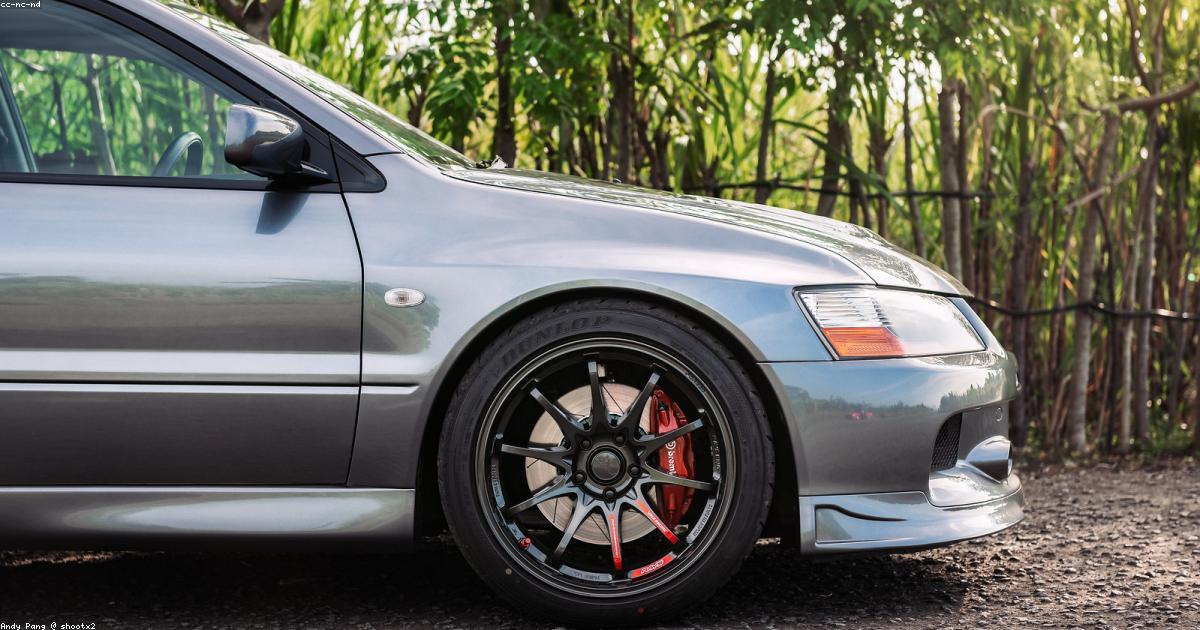
The Evo IX (2006-2007) became the definitive modern Evo, introducing more powerful turbocharging that legitimate sources rate at 315+ actual horsepower. This generation synthesized everything Mitsubishi learned across 15 years of evolution.
- Evo VIII (2004-2005): 280 HP official (310+ real), improved CT9A chassis, better interior quality. Import pricing: $20,000-$28,000 USD
- Evo IX (2006-2007): Final naturally-aspirated generation, most refined dynamics, desired "GSR" and "MR" variants. Current market: $25,000-$35,000 USD
- GSR vs. MR Distinction: GSR featured full interior; MR stripped weight with recaro seats and minimal sound deadening
Evolution X (2008-2015): The Final Evolution
The final Evolution X represented Mitsubishi's swan song for the legendary nameplate. Controversial among purists for adopting a twin-scroll turbocharger design and increasing displacement to 2.0 liters, the X nevertheless delivered genuine advancement in real-world performance and reliability.
- Twin-Scroll Turbocharger: Reduced turbo lag dramatically while producing 291 official horsepower (330+ real-world figures)
- 2.0L Displacement: Larger engine required to meet global emissions and efficiency standards
- Model Years & Specs: Early X models (2008-2010) featured 5-speed manuals; later examples (2011-2015) transitioned to 5-speed automatics on some markets
- Import Value: 2008-2010 models range $28,000-$38,000 USD; 2011-2015 models $32,000-$45,000 USD for clean examples
- MR Model Preference: The lightweight MR variant commands premiums of $3,000-$8,000 over standard GSR versions
Specifications & Performance Comparison
Understanding the precise specifications across generations helps you identify the Evo that matches your performance expectations and budget when you decide to import JDM cars.
- Engine Block Compatibility: Evo I-V used different 4G63 casting than Evo VI-X; internal modifications require generation-specific parts
- Transmission Evolution: Evo I-IX used 5-speed Getrag manuals; Evo X switched to Aisin AW automatic option
- Horsepower Reality Check: Factory figures (280 HP) consistently underrated actual output; independent dynos prove 310-330 HP range for well-maintained examples
- Torque Characteristics: Earlier generations peaked early (peak torque at 3,500 RPM); later X models flattened the curve significantly
- Curb Weight Progression: Evo I weighed 3,395 lbs; Evo X reached 3,640 lbs due to additional safety equipment
What Makes Importing the Lancer Evolution a Smart Investment
The Lancer Evolution represents exceptional value among best JDM cars for several converging factors. Unlike pure sports cars that depreciate rapidly, Evos appreciate as collectible modern classics. The rally heritage ensures substantial enthusiast demand globally.
Investment Appreciation Potential
Reliability & Parts Availability
- Engine Longevity: Properly maintained 4G63 engines regularly exceed 150,000 miles; many examples top 200,000+ miles
- Turbo Reliability: Factory turbochargers prove robust; IHI VJ13 units outlast numerous competitor designs
- Transmission Durability: Getrag 5-speed manuals handle stock power reliably; reinforcement required for builds exceeding 400 HP
- AWD System Robustness: Active Yaw Control systems prove remarkably durable with proper maintenance
Community & Support Network
Import Process: Essential Guidance
Age & Legal Compliance Requirements
Authenticity & Mileage Verification
Shipping & Logistics
Market Pricing & Value Guidance
Current Market Values (USD)