Turbocharged engines from the 1990s can reach 200,000+ miles if properly maintained, but turbochargers have finite lifespans. A replacement turbo kit for an RB26DETT costs $2,000-$4,000 for quality components plus installation. Evaluate compression ratios through compression testing (should be within 10% across cylinders) and listen for unusual noises indicating bearing wear.
The 1990s represents the most extraordinary decade in Japanese automotive history—a period when manufacturers like Nissan, Toyota, Mazda, and Honda unleashed some of the most thrilling 1990 japanese cars ever created. From the legendary Nissan Skyline R33 GT-R to the rotary-powered Mazda RX-7, this era defined what JDM enthusiasts worship today. If you're curious about old jdm cars and why collectors spend six figures acquiring them, the answer lies in understanding the engineering innovation, performance capabilities, and cultural significance of 1990s Japanese sports cars. This wasn't just a decade of horsepower—it was a revolution in automotive technology that changed global car culture forever.

Why the 1990s Was Japan's Golden Era for Sports Cars
The 1990s emerged as Japan's automotive sweet spot due to a perfect convergence of technological advancement, regulatory freedom, and unbridled engineering ambition. Unlike today's stringent emissions regulations and corporate restraint, Japanese manufacturers in the 1990s were operating in an environment where horsepower and performance were paramount. The end of the "Gentleman's Agreement" that limited power outputs (though not officially enforceable, manufacturers respected a 280 horsepower ceiling) on some vehicles meant engineers could push boundaries further.
Japan's economic bubble, while eventually bursting by the late 1990s, fueled incredible R&D spending during the early part of the decade. Manufacturers weren't constrained by quarterly profit margins in the same way they are today. This freedom allowed companies to develop technology like variable valve timing (VVTI), turbocharged engines, advanced differentials, and sophisticated suspension systems. The result? A lineup of jdm sports cars that still command respect and sky-high prices in today's collector market.
The Iconic 90s JDM Sports Cars That Defined the Era
Nissan Skyline R33 GT-R (1995-1998)
The R33 GT-R represents the peak of 1990s turbocharged engineering. Launched in 1995 with a 2.6-liter twin-turbocharged RB26DETT engine, it produced an official 280 horsepower (though real output exceeded 320 hp). The independent double-wishbone suspension, advanced all-wheel-drive system, and sequential turbochargers made it a technological marvel.
Early 1995 models cost approximately ¥7.2 million (roughly $75,000 USD at 1995 exchange rates). Today, well-maintained examples sell for $35,000-$65,000 depending on mileage and condition. The R33 became legendary for its grip and stability, with 0-60 mph acceleration in under 5 seconds—extraordinary for the mid-1990s.
Toyota Supra RZ (1993-2002)
The A80 generation Supra, launched in 1993, showcased Toyota's engineering prowess with its 3.0-liter twin-turbocharged 2JZ-GTE engine. Factory specifications listed 320 horsepower at 6,000 rpm and 315 lb-ft of torque. However, the engine's architecture proved legendary for turbo upgrades—many owners added larger turbos, ECU tuning, and modifications that pushed output beyond 600 horsepower.
The RZ model (the top-tier variant) sold for approximately ¥7.85 million in 1993 (around $80,000 USD). Today's market sees clean examples trading between $45,000-$80,000, with modified low-mileage specimens fetching premium prices exceeding $120,000. The 2JZ engine remains the most sought-after powerplant in the JDM world.
Mazda RX-7 FD (1991-2002)
The rotary-powered RX-7 FD generation represented Mazda's final hurrah with the iconic Wankel engine. Its twin-turbocharged 13B-REW engine produced 280 horsepower and delivered one of the most distinctive powerplant experiences in automotive history—high-revving, smooth, and utterly intoxicating.
The 1991 launch pricing started at approximately ¥6.5 million. Current market valuations place original low-mileage RX-7 FDs at $25,000-$55,000, though pristine examples command $70,000+. The relatively lightweight construction (around 2,800 lbs) and exceptional handling characteristics made it a driver's car par excellence.
Honda NSX (1990-2005 for original generation)
Honda's NSX, debuting in 1990, brought mid-engine supercar performance to a more accessible price point. The naturally aspirated 3.0-liter V6 produced 270 horsepower initially, increasing to 290 hp by 1997. Its aluminum body, sophisticated suspension, and unmatched reliability made it the thinking enthusiast's supercar.
Original 1990 NSX models listed for ¥12.3 million (approximately $110,000 USD). Today, early 1990s examples in excellent condition fetch $75,000-$150,000 depending on mileage. The NSX remains one of the few Japanese sports cars from the 90s that appreciated rather than depreciated over time.

Technical Innovations That Made 90s JDM Cars Revolutionary
Advanced Engine Technologies
The 1990s saw Japanese manufacturers pioneer technologies that remained industry-leading for decades. Variable valve timing (VVTI) in the Supra's 2JZ and later Skyline engines allowed precise cam timing adjustment, improving both low-end torque and high-RPM power. Twin-turbo setups became increasingly sophisticated, with sequential turbocharging that minimized lag while maximizing boost efficiency.
The Nissan RB26DETT in the R33 GT-R featured ceramic turbine wheels, titanium internals, and electronic boost control—technology that directly influenced modern turbocharger design. These weren't merely powerful engines; they were engineering masterpieces.
Chassis and Suspension Breakthroughs
The Nissan R33 GT-R introduced an advanced four-wheel steering system and Active LSD (Limited Slip Differential) that electronically adjusted lock-up based on driving conditions. The RX-7 FD featured a multi-link rear suspension that became the template for modern sports car design. These weren't simple mechanical systems—they were computer-controlled, adaptive platforms that responded to driver input in real-time.
Lightweight Construction
Japanese manufacturers in the 1990s obsessed over weight reduction. The NSX's aluminum body saved 200+ pounds compared to steel alternatives. The RX-7 FD's composite panels and sparse interior reduced overall mass. This philosophy—extracting performance through reduced weight rather than excessive horsepower—reflected a maturity in automotive engineering that prioritized balance over raw power.
The JDM Export Boom: From 1990 to 2010 and Beyond
While the 1990s produced the golden era of JDM sports cars, the term "JDM" as we know it today didn't gain traction until the early 2000s. By 2010, the JDM export market had exploded, with collectors worldwide seeking these Japanese treasures. The popularity of street racing culture, particularly in North America and Europe, created unprecedented demand for old jdm cars from the 1990s.
A single 2010 jdm cars market analysis shows that early 1990s models appreciated significantly. Vehicles that cost $30,000 new and depreciated to $10,000 by 2005 were suddenly worth $40,000+ by 2010. This resurgence reflected two factors: increased appreciation for Japanese engineering heritage and the 25-year rule that allowed certain vehicles to be legally imported to the United States with full compliance.
Comparing Performance: 1990s JDM vs Modern Japanese Sports Cars
- Nissan Skyline R33 GT-R (1995): 280 hp (official), 0-60 in 4.8 seconds, $75,000 USD equivalent
- Toyota GR Supra A90 (2020): 335 hp, 0-60 in 3.9 seconds, $43,000 USD
- Mazda RX-7 FD (1991): 280 hp, 0-60 in 4.7 seconds, $65,000 USD equivalent
- Mazda RX-9 (Upcoming): Estimated 370 hp, significantly higher price point
- Honda NSX (1990): 270 hp, 0-60 in 6.0 seconds (initially), $110,000 USD equivalent
- Honda NSX (2016-2022): 573 hp (hybrid), 0-60 in 2.9 seconds, $156,000 USD
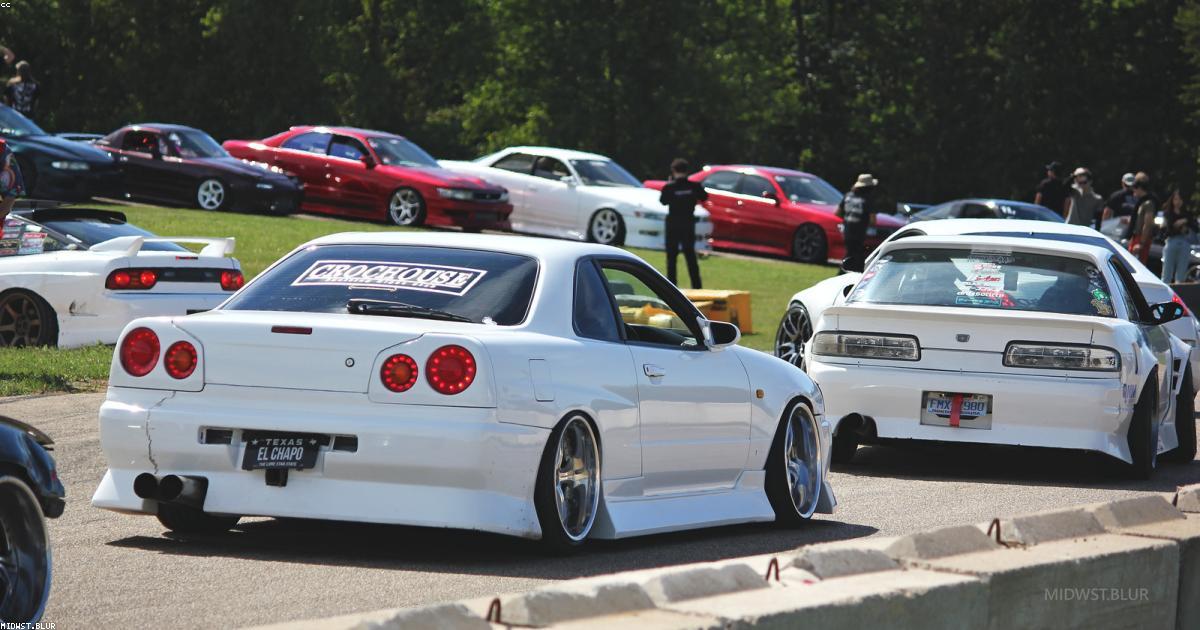
While modern Japanese sports cars offer superior horsepower and acceleration, the 1990s vehicles capture something contemporary cars struggle to replicate: mechanical purity. No turbo lag compensation through electronics, no artificial throttle response mapping, no stability control limiting slip angles. The driver felt directly connected to the machine in ways that resonate deeply with enthusiasts today.
Why 90s JDM Cars Command Premium Prices Today
The collector market for 1990 japanese cars has experienced explosive growth for several interconnected reasons. First, scarcity: many 1990s cars have been crashed, modified beyond recognition, or scrapped. Finding an original, low-mileage example requires patience and resources. Second, nostalgia: millennials who grew up watching Initial D and Fast & Furious now possess disposable income to acquire their dream cars. Third, investment potential: early 1990s examples have demonstrated consistent appreciation, making them genuinely sound financial investments.
Specific examples illustrate this trajectory. A 1995 R33 GT-R that sold for ¥7.2 million ($75,000) in 1995 depreciated to approximately $15,000 by 2005. By 2015, the same car was worth $40,000. Today, clean examples fetch $55,000-$65,000. For investors, this represents a compound annual growth rate that rivals real estate in many markets.
The Cultural Impact: How 90s JDM Sports Cars Changed Global Car Culture
The 1990s JDM boom didn't just produce legendary cars—it fundamentally altered how the world perceived Japanese automobiles. Prior to this era, Japan was primarily associated with reliability and practicality, not passion and performance. The emergence of jdm sports cars that could outperform European supercars shattered that perception.
Tokyo's underground racing scene, the rise of tuning culture, and the subsequent globalization of drift racing created an aspirational mythology around these vehicles. The Skyline GT-R became so dominant in illegal street racing that it was temporarily banned from Australian highways. The Supra's legendary 2JZ engine became the platform of choice for extreme modifications. The RX-7's rotary engine inspired a devoted following that persists today.
This cultural momentum explains why a modified 1990s JDM car might attract more enthusiast attention than a modern supercar costing three times as much. These vehicles represent authenticity, mechanical honesty, and a pre-digital era when engineering innovation took precedence over profit optimization.
Buying a 1990s JDM Car: What Modern Collectors Need to Know
Import Regulations and the 25-Year Rule
The United States' 25-year import rule allows vehicles manufactured 25+ years ago to be legally imported without meeting current EPA and NHTSA standards. This means 1999 and earlier models can be legally imported, though documentation, customs fees, and professional shipping services can add $5,000-$15,000 to acquisition costs. Vehicles imported before reaching 25 years old require extensive compliance modifications.
Mileage and Maintenance Documentation
Japanese vehicles from the 1990s that spent their lives domestically typically have detailed maintenance records. Ask for service history, parts replacement documentation, and JCI inspection records (Japan's equivalent to MOT testing). A car with 50,000 original miles and full service history might cost 20-30% more than a higher-mileage example but represents far superior investment potential.
Rust and Corrosion Concerns
Many 1990s JDM cars spent decades in humid Japanese climates. Examine undercarriage thoroughly for rust, particularly around suspension mounting points, fuel lines, and brake components. Professional pre-purchase inspections by JDM specialists cost $300-$800 but can reveal hidden corrosion that might cost $5,000-$20,000 to remediate.
Engine Condition and Turbo Life
Turbocharged engines from the 1990s can reach 200,000+ miles if properly maintained, but turbochargers have finite lifespans. A replacement turbo kit for an RB26DETT costs $2,000-$4,000 for quality components plus installation. Evaluate compression ratios through compression testing (should be within 10% across cylinders) and listen for unusual noises indicating bearing wear.
Experience These JDM Legends in Person
Before you buy, why not drive your dream JDM car through the streets of Tokyo? Samurai Car Japan offers exclusive JDM Night Tours where you can get behind the wheel of R34 GT-Rs, RX-7s, Supras, and more.
See these cars up close, feel their power, and make an informed buying decision. Many of our tour guests end up purchasing their dream JDM car after experiencing it firsthand!
Frequently Asked Questions About 90s JDM Cars
What makes 1990 japanese cars more valuable than newer Japanese sports cars?
Several factors contribute to appreciation in older models: scarcity (fewer surviving examples), historical significance as pioneering performance vehicles, investment demand from collectors, and the 25-year import rule that suddenly expands global availability. Additionally, 1990s cars represent a more mechanical, analog era that modern enthusiasts find increasingly appealing.
Is the Nissan Skyline R33 GT-R the best 1990s JDM sports car?
The R33 GT-R is legendary, but "best" depends on priorities. The R33 excels in all-around performance and technological sophistication. The Supra 2JZ offers superior engine tunability and reliability. The RX-7 FD provides the most visceral driving experience. The NSX delivers supercar performance with Japanese reliability. Each represents different engineering philosophies—there's no objectively superior choice, only different strengths.
How does a stock 1990s JDM car compare to a 2010 jdm cars in terms of performance?
Stock 1990s JDM cars produce 270-320 horsepower, typically achieving 0-60 times between 4.7-5.5 seconds. By 2010, Japanese sports cars had evolved—the 2010 Nissan GT-R (R35, though not strictly "JDM" in the traditional sense) produced 485 horsepower and 0-60 in 2.9 seconds. However, many drivers prefer the 90s experience despite lower numbers because of reduced electronic intervention and more direct mechanical feedback.
What's the most affordable classic 1990s JDM sports car to buy today?
The Mazda RX-7 FD generally offers the lowest entry point, with examples available from $22,000-$35,000 for higher-mileage vehicles. The Toyota Supra's availability also creates competitive pricing—high-mileage examples can be found for $35,000-$45,000. Both require honest assessment of condition and potential repair costs, but they offer tremendous value compared to R33 GT-Rs or NSX models.
Will old jdm cars continue appreciating in value?
Historical data suggests yes, though with important caveats. Properly maintained, low-mileage examples will likely continue appreciating as scarcity increases and collector demand grows. However, vehicles with accident history, extensive modifications, or high mileage may not show the same appreciation. The best performers have been original condition cars with documented maintenance history—authenticity and preservation matter more than raw power.
The Legacy of 90s JDM Sports Cars Continues Today
The 1990s represented an unrepeatable convergence of engineering freedom, economic abundance, and manufacturer ambition. The 1990 japanese cars produced during this era fundamentally altered global automotive culture and continue to inspire engineers, enthusiasts, and collectors worldwide. Whether you're considering purchasing an old jdm cars example or simply appreciating these machines from afar, understand that you