The 70s JDM era represents one of the most transformative periods in automotive history, when Japanese manufacturers boldly challenged American and European dominance with innovative engineering, reliability, and raw performance. During this golden decade, 70s jdm cars transitioned from affordable economy vehicles to legitimate competitors on the world stage, fundamentally reshaping how the global automotive industry viewed Japan. From the iconic Datsun Fairlady Z to the turbocharged Toyota Celica, these machines proved that Japanese craftsmanship could deliver not just practicality, but genuine driving excitement and longevity that would outlast their Western counterparts by decades.

The Birth of a Global Phenomenon: Understanding the 70s JDM Movement
The 1970s marked a pivotal moment when old jdm vehicles began appearing in showrooms across North America, Europe, and beyond with increasing frequency. The decade started with the oil crisis of 1973, which devastated fuel-hungry American muscle cars and created an unprecedented demand for efficient, reliable vehicles. Japanese manufacturers, already known for their meticulous quality control and innovative manufacturing techniques, seized this opportunity with remarkable timing. While American automakers struggled to adapt to new emissions standards and fuel economy requirements, Japanese companies like Datsun (Nissan), Toyota, and Mazda offered practical solutions that respected both government regulations and consumer wallets.
What made the 70s JDM phenomenon truly revolutionary wasn't just efficiency—it was the simultaneous development of genuine performance vehicles. Japanese engineers proved they could build sports cars that rivaled established names in handling, acceleration, and reliability, all while costing significantly less. By 1979, Japanese manufacturers had captured over 20% of the American automotive market, a trajectory that would only accelerate through the 1980s and beyond.
Iconic 70s JDM Cars That Changed Everything
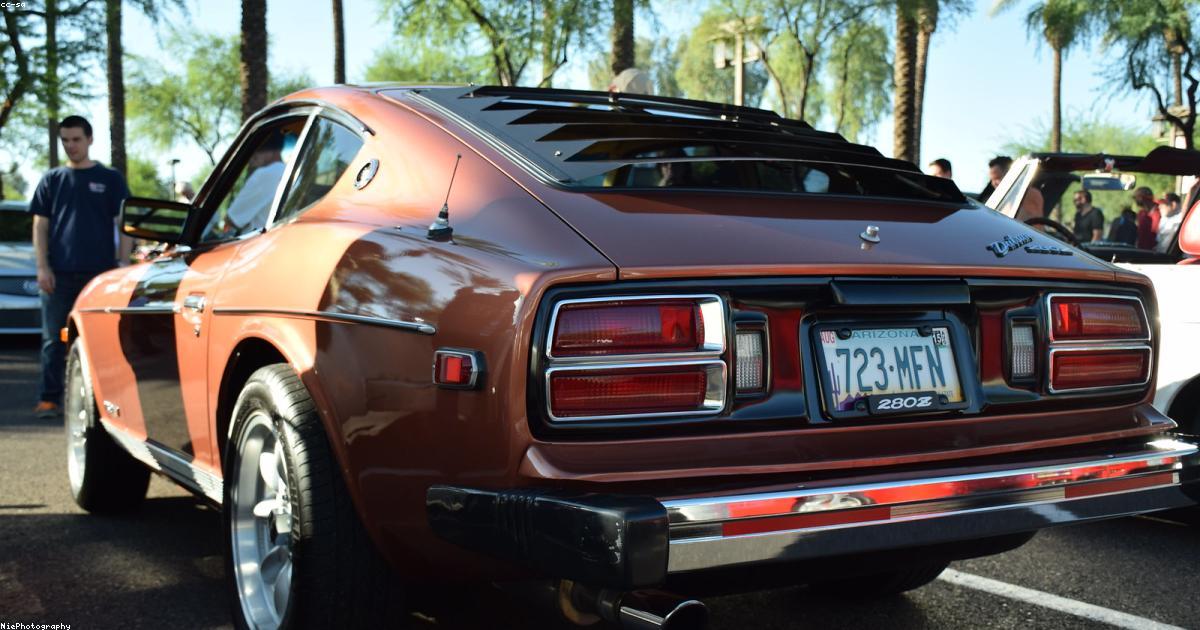
Datsun Fairlady Z (1970-1978) - The Z-Car Legend
If any single vehicle defines the datsun jdm golden age, it's the Fairlady Z. Launched in 1970 (S30 generation), the original Z was an immediate sensation that proved Japanese manufacturers could build world-class sports cars. The 1970 model featured a 2.0-liter L20 inline-six engine producing 150 horsepower, accelerating from 0-60 mph in approximately 8.3 seconds—genuinely impressive for the era.
By 1974, the Z received significant upgrades, with the L24 engine displacement increasing to 2.4 liters and power rising to 165 horsepower in the 280Z model. Japanese domestic market versions occasionally received different specifications, with some variants featuring higher compression ratios and enhanced tuning that delivered upwards of 180 horsepower. The 280Z dominated road tests throughout the 1970s, frequently outperforming Porsche 911s costing nearly three times as much. Original 1970s Fairlady Z models in excellent condition now fetch $35,000 to $75,000 USD, with pristine examples reaching $150,000 or beyond.
Toyota Celica (1971-1981) - Performance Meets Affordability
The original Toyota Celica (A20 generation, 1971-1977) represented Toyota's bold entry into the affordable sports car market. The base 1971 model featured a 1.6-liter 2T-G engine with twin carburetors producing 118 horsepower, yet its sophisticated double-wishbone suspension and lightweight construction (approximately 1,100 kg or 2,425 lbs) made it genuinely enjoyable to drive.
The real breakthrough came in 1974 when Toyota introduced the Celica GT with the 2T-GEU engine, a 2.0-liter variant producing 135 horsepower. Japanese market Celicas often featured more aggressive tuning, and turbocharged variants were explored by enthusiasts, with some modified examples exceeding 200 horsepower. The second-generation Celica (A40, 1977-1981) brought significant advances, particularly the GT model with its 16-valve 2T-GE engine generating 140 horsepower. Period testing from Motor Trend showed the Celica could accelerate from 0-60 mph in approximately 8.5 seconds, making it competitive with much more expensive European sports cars. Today, well-maintained 70s Celicas sell for $8,000 to $25,000 depending on condition and model year.
Mazda RX-3 and RX-5 (1971-1985) - The Rotary Revolution
Mazda's commitment to rotary engine technology set it apart from competitors during the 70s JDM era. The RX-3 (1971-1978) featured the 12A rotary engine producing 110 horsepower in standard form, though higher-output versions reached 135 horsepower. The innovative rotary design offered smooth, high-revving power delivery that fascinated enthusiasts and journalists alike. Japanese market RX-3 GT models with refined tuning and better breathing capabilities were particularly sought-after, with some configurations exceeding 150 horsepower.
The RX-5 (1975-1985), also known as the Savanna in Japan, expanded Mazda's rotary portfolio with a larger 13B engine producing 135 horsepower. Road tests consistently praised the RX series for handling precision and mechanical elegance, despite rotary engines' reputation for higher fuel consumption. These vehicles represented Mazda's bold technological differentiation strategy during an era when conventional piston engines dominated. Surviving examples from the 1970s now command $6,000 to $18,000, with special edition models fetching premium prices.
Nissan Skyline (1968-1972 C10, 1972-1977 C110)
While the iconic Skyline GT-R wouldn't arrive until 1969, the early 1970s Skyline models (particularly the C110 generation from 1972-1977) represented significant performance achievements. The C110 Skyline 2000GT featured a 2.0-liter L20 engine with dual carburetors producing 130 horsepower, combining lightweight construction with sophisticated chassis design. The 1973 Skyline 2000GT-X introduced the advanced L20A engine with electronic fuel injection, a relatively rare feature for the era, producing 135 horsepower with superior reliability and cold-start characteristics.
Japanese domestic market versions occasionally received higher-compression variants and special tuning that pushed power above 150 horsepower. The Skyline's reputation for structural rigidity and dependable engineering made it a favorite among serious drivers. Original C110 Skylines in good condition typically sell for $12,000 to $35,000, with pristine examples reaching significantly higher valuations.
The Technical Innovations Behind 70s JDM Success
The success of 70s jdm cars wasn't accidental—it resulted from systematic engineering excellence and commitment to innovation. Japanese manufacturers focused on several key areas that differentiated them from competitors:
Emissions Technology and Fuel Efficiency
While American manufacturers struggled to meet increasingly stringent emissions regulations, Japanese engineers developed sophisticated systems that maintained performance while reducing pollutants. The electronic fuel injection systems pioneered by companies like Nissan and Toyota proved more adaptable to emissions standards than traditional carburetors, providing reliable operation in diverse climates and altitudes.
Manufacturing Quality and Consistency
Japanese manufacturers implemented statistical process control and quality assurance programs that were revolutionary for the automotive industry. The phrase "Japanese reliability" became commonplace by the late 1970s, as consumers discovered that vehicles like the Datsun Z and Toyota Celica could accumulate 150,000 miles or more with minimal major repairs. This contrasted sharply with American and European sports cars from the same era, which often required significant maintenance at half those mileage intervals.
Lightweight Construction and Aerodynamics
Japanese sports cars from the 1970s typically weighed significantly less than American equivalents. A 1974 Datsun 280Z weighed approximately 1,000 kg (2,205 lbs), compared to a Chevrolet Corvette of the same era at roughly 1,360 kg (3,000 lbs). This weight advantage, combined with increasingly sophisticated suspension geometry, allowed smaller Japanese engines to achieve competitive performance figures. The emphasis on aerodynamic design also helped fuel economy and stability at highway speeds.
Market Impact and Global Expansion
The triumph of old jdm vehicles throughout the 1970s fundamentally altered the global automotive landscape. Japanese manufacturers' cumulative market share in the United States grew from approximately 4% in 1970 to over 22% by 1979. This wasn't limited to economy cars—sports car enthusiasts worldwide increasingly chose Japanese vehicles, attracted by superior reliability, reasonable pricing, and increasingly sophisticated engineering.
The financial impact was substantial. In 1970, Japanese manufacturers exported approximately 1.8 million vehicles globally. By 1979, that figure had grown to 4.3 million vehicles annually. American and European manufacturers that had previously ignored Japanese competition suddenly faced existential business challenges, prompting decades of restructuring and technological advancement.
Specifically for sports cars and performance vehicles, the impact was even more dramatic. Japanese manufacturers proved that genuinely entertaining vehicles didn't require excessive displacement, exotic construction materials, or premium pricing. A 1974 Datsun 280Z costed approximately $8,000-$10,000 USD, while comparable European sports cars commanded $15,000-$25,000 or more.
The Collector Car Market: 70s JDM Valuations Today
The investment potential of 70s jdm cars has become increasingly apparent to collectors worldwide. Original vehicles in exceptional condition represent stable or appreciating assets, with several factors influencing valuations:
- Original vs. Modified: Completely original, unmolested examples command significant premiums. A completely original 1970 Fairlady Z in excellent condition might sell for $60,000-$75,000, while a modified example with modern upgrades might fetch only $25,000-$40,000.
- Mileage and Maintenance History: Documentation proving consistent maintenance is crucial. Low-mileage examples (under 50,000 miles) are increasingly rare and valuable. A low-mileage 1974 Celica GT with complete service records might command $18,000-$28,000.
- Market Rarity: North American market vehicles are generally more affordable than Japanese domestic market equivalents. A Japanese domestic market 1975 Skyline 2000GT-X might sell for 30-50% more than an equivalent export model.
- Condition Grade: Professional auction houses typically categorize vehicles as Excellent, Good, Fair, or Poor. Excellent condition examples (typically priced $40,000-$150,000+) have become standard investment targets for serious collectors.
- Provenance and History: Documented racing history, celebrity ownership, or other cultural significance can dramatically increase valuations.
Preserving and Enjoying 70s JDM Classics
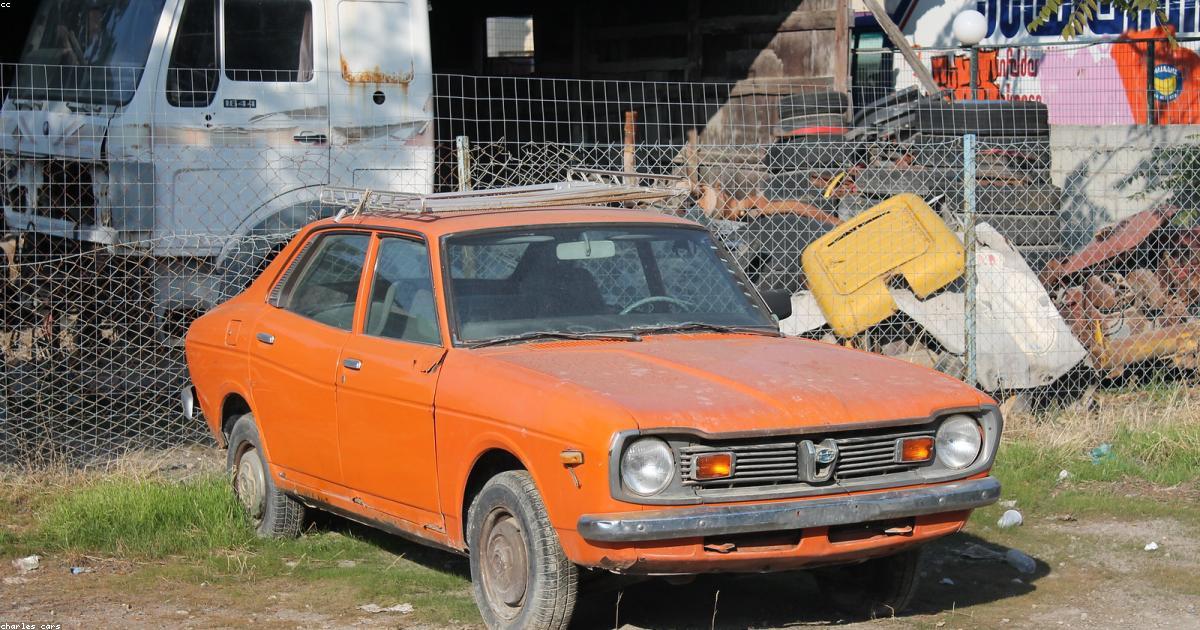
For enthusiasts seeking to purchase or preserve 70s jdm cars, several considerations merit careful attention. These vehicles are now 45-55 years old, and ownership requires commitment to proper maintenance and preservation.
Mechanical Maintenance Priorities
- Fuel System Renewal: Original fuel tanks and fuel lines deteriorate significantly over decades. Replacement with period-correct components is essential, typically costing $800-$2,500 depending on complexity.
- Cooling System Overhaul: Original radiators and water pumps should be professionally rebuilt or replaced. Budget $1,200-$2,200 for comprehensive cooling system restoration.
- Brake System Upgrades: Original drum brakes or early disc systems don't meet modern safety standards. Upgrading to period-appropriate disc brakes throughout is essential, costing $1,500-$3,500.
- Suspension Refresh: Bushings, bearings, and dampers deteriorate over 50 years. Complete suspension overhaul with OEM-specification replacements typically ranges from $2,000-$5,000.
- Electrical System: Original wiring harnesses often become brittle and dangerous. Complete rewiring using modern components while maintaining aesthetic authenticity costs $1,500-$3,500.
Interior and Exterior Preservation
Preserving original interiors requires patience and specialized knowledge. Vinyl seats can be professionally restored rather than replaced, maintaining authenticity while improving durability. Paint restoration, when done properly by specialists experienced with vintage Japanese vehicles, can cost $3,000-$8,000 for comprehensive work but dramatically improves both appearance and protection.
The Legacy of 70s JDM Innovation
The 70s jdm era established engineering and manufacturing philosophies that Japanese automotive companies still employ today. The principles of continuous improvement (kaizen), statistical quality control, and customer-focused innovation that drove success in the 1970s remain central to modern Japanese automotive excellence. Companies that struggled against Japanese competition in the 1970s—including General Motors, Ford, and Chrysler—spent decades restructuring and adopting quality-focused manufacturing methodologies learned partly from Japanese examples.
For contemporary enthusiasts, old jdm vehicles from the 1970s represent more than nostalgic transportation. They embody a specific moment in automotive history when engineering innovation, quality manufacturing, and affordable pricing converged to challenge established hierarchies. Driving a preserved 1974 Datsun 280Z or 1975 Toyota Celica provides insight into the values and capabilities that established Japanese manufacturers as global automotive leaders—a position they have consistently maintained for five decades.
Experience These JDM Legends in Person
Before you buy, why not drive your dream JDM car through the streets of Tokyo? Samurai Car Japan offers exclusive JDM Night Tours where you can get behind the wheel of R34 GT-Rs, RX-7s, Supras, and more.
See these cars up close, feel their power, and make an informed buying decision. Many of our tour guests end up purchasing their dream JDM car after experiencing it firsthand!
Frequently Asked Questions About 70s JDM Cars
Which 70s JDM car is the best investment?
The Datsun Fairlady Z consistently appreciates most reliably, particularly early 1970s models (1970-1974). Original 1970-1971 Z models in excellent condition have appreciated at approximately 8-12% annually over the past decade. Toyota Celicas and Nissan Skylines represent more affordable entry points with similarly strong appreciation potential. The key to investment success is purchasing the most original, lowest-mileage example you can afford in the best overall condition.
How much does it cost to restore a 70s JDM car?
A comprehensive frame-off restoration of a 1970s Japanese sports car typically ranges from $25,000-$60,000, depending on initial condition and desired outcome. Mechanical restoration (brakes, suspension, engine, transmission) costs $8,000-$18,000. Paint and body work ranges from $4,000-$15,000. Interior restoration costs $3,000-$8,000. For comparison, purchasing a pre-restored example often proves more economical than personally undertaking a complete restoration, particularly when accounting for labor costs and unexpected complications.
Are 70s JDM cars reliable for regular driving?
With proper maintenance, original 70s JDM vehicles can be driven regularly and reliably. These cars were engineered for durability and longevity, with many original components still functioning after 50+ years. However, modern traffic patterns, fuel formulations, and emissions standards present challenges. Original vehicles lack features like power steering, air conditioning efficiency, and creature comforts found in modern cars. Most owners enjoy these vehicles in fair-weather, weekend driving scenarios rather than as daily transportation. Regular maintenance, quality replacement parts, and experienced mechanics familiar with vintage Japanese vehicles are essential.
What should I check when buying a vintage 70s JDM car?
Inspect the frame for welding repairs, rust penetration, and structural damage. Examine the engine bay for evidence of overheating, corrosion, and fluid leaks. Check all running gear—suspension, brake lines, fuel system, and electrical connections. Request complete service history documentation. Have a pre-purchase inspection performed by a specialist familiar with vintage Japanese vehicles, costing $300-$600 but potentially saving thousands. Verify vehicle identification numbers match documentation. Evaluate whether the vehicle is original or has been modified, as this dramatically affects both value and driving characteristics.
Where can I source parts for 70s JDM cars?
Established specialty suppliers like Nissan Z specialists, Datsun parts suppliers, and Japanese classic car shops stock reproduction and original components. Online marketplaces, Japanese automotive forums, and international parts brokers connect buyers with hard-to-find original components. Quality varies significantly—reproduction parts range from excellent OEM-equivalent quality to questionable reproductions. For critical components like brake lines, fuel system parts, and suspension bushings, sourcing quality replacements is essential. Budget 15-25% more for premium parts versus budget alternatives. Many owners develop relationships with specialists who understand specific model requirements.